Oct 14, 2026
Even with a consistent skincare routine, you may notice that your skin doesn’t look or feel as smooth as it once did. Fine lines become more noticeable, rough patches persist, or old acne scars leave behind uneven texture that makeup can’t completely conceal. These concerns can be frustrating, especially when skincare products aren’t delivering the improvements you’re hoping for.
Frax laser resurfacing offers a nonsurgical way to address skin texture, fine lines, and certain types of scarring. By stimulating the skin’s natural collagen remodeling process, this treatment can gradually improve smoothness and soften visible irregularities.
At Remedy Skin + Body in Westlake Village, we use Frax laser technology on our Nordlys platform to help patients address these concerns. Here’s what you should know about how it works, what it can improve, and what to expect from treatment.
Frax laser resurfacing is a fractional laser treatment designed to improve skin texture and appearance. Rather than treating the entire skin surface at once, the laser delivers energy into thousands of microscopic treatment zones while leaving surrounding tissue intact.
This approach encourages the skin’s natural healing response and stimulates collagen remodeling beneath the surface. The untreated tissue between treatment zones helps support recovery.
Collagen is essential for maintaining the skin’s structure and smoothness. As collagen production changes with age, fine lines and textural irregularities can become more noticeable. Acne scars may also leave behind uneven areas where collagen was damaged during the healing process.
Frax works by encouraging the skin to remodel collagen in treated areas, gradually improving its appearance and texture.
Unlike a facial or topical skincare product, Frax reaches beneath the outermost skin layer to address some of the structural changes contributing to these concerns.
Also Read: How Frax Laser Improves Acne Scars and Skin Texture
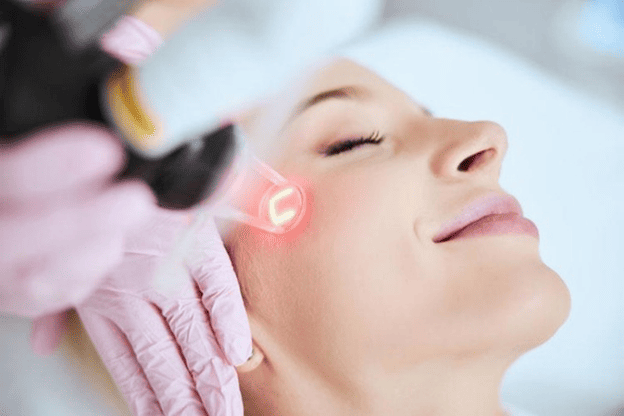
Frax delivers controlled laser energy into precise microscopic columns within the skin. The heat stimulates a healing response that encourages collagen remodeling over the following weeks and months.
This process is particularly relevant for patients concerned about rough texture, superficial fine lines, and certain depressed scars. As collagen remodels, treated areas may gradually become smoother and more uniform.
Because Frax uses fractional technology, surrounding tissue remains untreated and helps support healing. The Nordlys platform offers non-ablative Frax technology, including 1550 nm and 1940 nm wavelengths, which heats targeted tissue without removing the entire outer skin layer.
Compared with fully ablative laser resurfacing, non-ablative fractional treatment generally involves less downtime, although recovery varies depending on treatment settings and individual skin response.
Our providers adjust treatment parameters based on your skin type, the area being treated, and the concerns you want to address.
Frax laser resurfacing can address several concerns associated with changes in skin texture and collagen. While improvements vary from patient to patient, treatment may help create a smoother, more refined appearance over time.
Skin texture can change gradually with age, previous breakouts, and changes in collagen structure. You may notice areas that feel rough, look uneven in certain lighting, or make makeup difficult to apply smoothly.
Frax encourages collagen remodeling in targeted areas, helping improve the appearance of textural irregularities. As the skin heals, rough or uneven areas may become smoother.
The improvement is gradual, and some patients benefit from a series of treatments rather than a single session.
Fine lines often develop as the skin loses some of its natural collagen support. They may become more noticeable around the eyes, mouth, and other areas where the skin is thinner or frequently moves.
Frax stimulates collagen remodeling, which can help soften superficial lines and improve the overall appearance of treated skin.
However, not all wrinkles respond to laser resurfacing in the same way. Deeper expression lines caused by repeated muscle movement may require a different approach.
During your consultation, our team can help determine whether Frax is appropriate for the lines you’re concerned about.
Acne scars can remain long after active breakouts have cleared. Some leave behind shallow depressions or uneven areas that become particularly noticeable under direct lighting.
These scars often develop when inflammation disrupts normal collagen formation during healing.
Frax may help improve certain depressed acne scars by stimulating collagen remodeling in the affected areas. Over time, this can soften the appearance of some scars and create a smoother-looking surface.
Results depend on the type and depth of scarring. Shallow textural scars may respond differently from deeper ice-pick or tethered scars, which may require additional treatment approaches.
For patients considering different options, our article on laser skin therapy and microneedling for acne scars explains how these treatments may help improve the appearance of scarring.
As collagen remodeling continues, patients may notice that their skin looks smoother and feels more refined. Fine lines may appear softer, and some textural irregularities may become less noticeable.
Frax can also address certain pigmentation concerns and sun-related changes, depending on the treatment approach. However, its ability to improve skin texture, fine lines, and selected scars makes it particularly relevant for patients seeking improvements in the skin’s overall surface quality.
Results develop progressively rather than immediately, and the degree of improvement depends on your skin and treatment plan.
Also Read: Microneedling vs Laser Resurfacing: Which Treatment Is Right for You?
Frax may be worth considering if you’re concerned about persistent roughness, early fine lines, or uneven texture from previous acne breakouts.
For example, you might notice that your skin feels rough despite regular exfoliation, that fine lines remain visible even when your skin is well hydrated, or that old acne scars make certain areas look uneven.
These concerns don’t always respond adequately to topical skincare products because some involve changes beneath the skin’s surface.
However, Frax isn’t necessarily the best treatment for every patient or every type of scarring.
Skin type, medical history, current medications, previous procedures, and individual healing tendencies all influence whether fractional laser resurfacing is appropriate. Patients who are prone to post-inflammatory pigmentation changes may require additional precautions or an alternative treatment.
Some concerns may also respond better to other procedures or a combination of treatments.
If you’re comparing treatment options, our guide to microneedling versus laser resurfacing explains how the two approaches differ.
A consultation allows our providers to evaluate your skin, discuss realistic expectations, and recommend an appropriate treatment plan.
Before treatment, your skin is cleansed, and a topical anesthetic may be applied to improve comfort. The procedure generally takes approximately 15 to 45 minutes for facial treatment, depending on the area and settings.
During the session, you may feel warmth, prickling, or a mild snapping sensation as the laser passes over the skin.
Immediately afterward, temporary redness, swelling, and warmth similar to a sunburn are common. Some patients also experience a rough or sandpaper-like texture as the skin moves through the healing process.
With non-ablative fractional laser resurfacing, visible recovery often lasts several days, although individual experiences vary. More intensive treatment settings may require additional recovery time.
Your provider will explain how to care for your skin after treatment. Instructions typically include gentle cleansing, moisturizing, avoiding irritating skincare products, and protecting treated areas from sun exposure.
Some patients notice early improvements in skin smoothness after the initial healing period. However, changes related to collagen remodeling take longer to develop.
Fine lines and certain textural irregularities may continue improving over several weeks or months.
Acne scars often require multiple treatments, and complete scar removal should not be expected. The goal is to improve their appearance and help create a smoother skin surface.
Your provider will discuss the number of sessions that may be appropriate based on your concerns and the response of your skin.
Rough skin texture, fine lines, and lingering acne scars can be difficult to improve with skincare products alone. Frax laser resurfacing offers a nonsurgical option that works beneath the skin’s surface to stimulate collagen remodeling and gradually improve certain textural concerns.
At Remedy Skin + Body, we tailor treatment recommendations to each patient’s skin, concerns, and goals. Whether you’re hoping to soften early fine lines, improve rough texture, or reduce the appearance of acne scars, our team can help you understand what Frax may realistically accomplish.
If you’re ready to explore your options for smoother, healthier-looking skin, contact Remedy Skin + Body in Westlake Village to schedule a consultation.
Frax is a fractional laser treatment that delivers controlled energy into microscopic treatment zones within the skin. It stimulates collagen remodeling to help improve uneven texture, superficial fine lines, and the appearance of certain scars while leaving surrounding tissue intact to support recovery.
Frax may help improve selected depressed acne scars by stimulating collagen remodeling in treated areas. Results depend on scar type, depth, and severity. Multiple sessions may be necessary, and some deeper scars may require additional procedures.
Frax can help soften superficial fine lines associated with changes in skin texture and collagen. Deeper expression wrinkles or significant skin laxity may respond better to other treatments. A consultation can help determine whether Frax is appropriate for your concerns.
Yes, Frax may help improve certain textural irregularities by encouraging collagen remodeling beneath the skin’s surface. Patients with roughness, uneven texture, or selected shallow scars may notice gradual improvements in smoothness following treatment.
Some improvements in smoothness may become noticeable after the initial healing period. Collagen remodeling continues over several weeks and months, so results generally develop gradually. Multiple sessions may be recommended depending on the concerns being treated.
Non-ablative Frax treatment generally involves less downtime than fully ablative resurfacing. Temporary redness, swelling, and roughness may last several days, although recovery varies depending on treatment intensity and individual skin response.
Disclaimer: This article is for educational purposes and does not replace professional medical advice. A consultation with a qualified provider at Remedy Skin + Body is necessary to determine whether Frax laser resurfacing is appropriate for your skin.